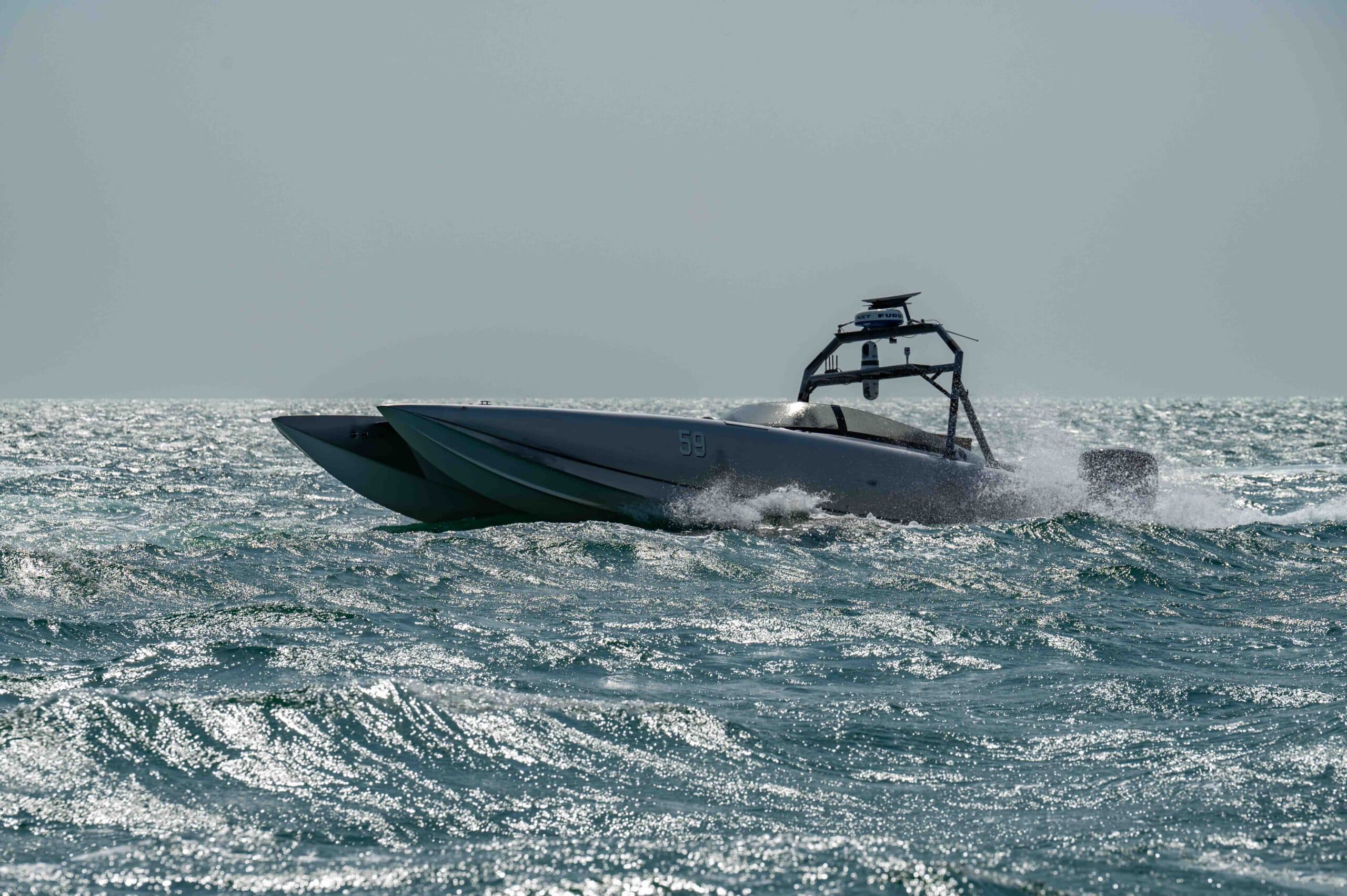
The US Navy transferred 400 gallons of fuel to an unmanned surface vessel during an August 11 trial off Joint Expeditionary Base Little Creek-Fort Story, Virginia, according to a Navy account published September 2. The training support vessel USNS Vindicator towed a robotic connector that repeatedly captured and released a remotely controlled T38 boat. The demonstration tested a way to keep unmanned vessels at sea without returning to port for fuel.
Removing the crew from a boat leaves its supply requirements intact. Every trip back to port takes its sensors off station. Refueling at sea can reduce that interruption, but the Virginia trial still depended on a support vessel and human operators to complete the process.
The Naval Air Warfare Center Weapons Division's Blue Water Instrumentation program led the trial with T38 builder Maritime Tactical Systems and connector developer Sealartec. Program official Spencer Holloway said its immediate requirement is collecting data during hypersonic and precision long-range weapons tests, whose flight paths can extend thousands of miles beyond fixed test ranges. Those flights require sensors distributed across a wide area of ocean.
Holloway reported dozens of complete refueling exercises at sea, alongside pierside demonstrations. Sealartec chief executive Amitai Peleg said the connector completed about 100 connection cycles across several days of testing. That figure includes the work leading up to the August 11 event; it is not a count of 100 separate refuelings at sea.
The next test is intended to combine autonomous rendezvous and approach with connection, fuel transfer, disconnection and return to mission. Holloway identified two immediate tasks: reducing command delays during precise operator-assisted maneuvering and integrating new local positioning systems to support autonomous refueling.
The next milestone must show that the boat can reach the connector and complete the refueling sequence without an operator guiding it through the maneuver. Until then, keeping these unmanned sensors deployed still requires people at the controls and a vessel bringing the fuel.