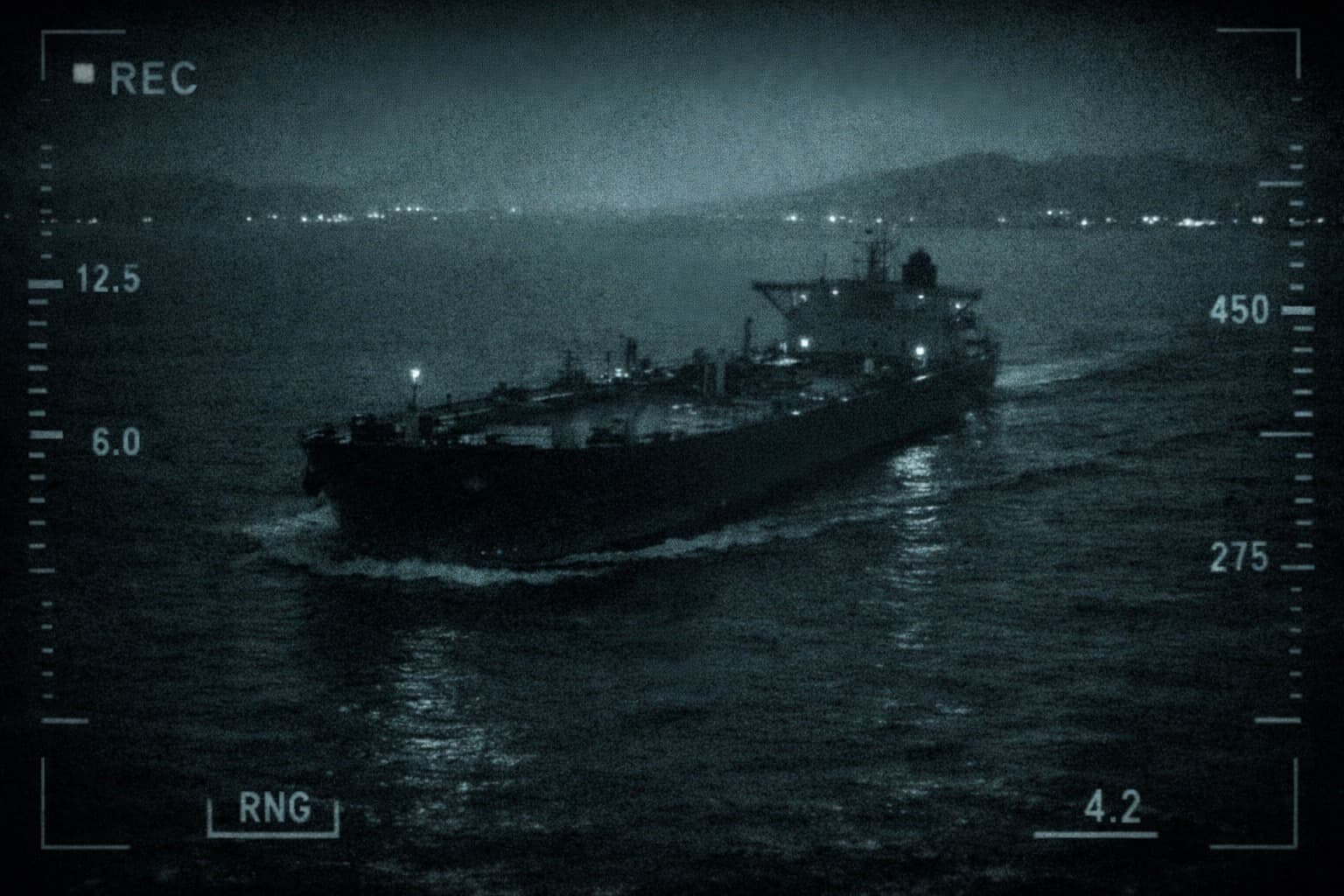
A tanker broadcasting the identity of a scrapped Japanese LNG carrier transited the Strait of Hormuz on March 20, 2026. The vessel’s IMO number belonged to the LNG Jamal, a ship that had been beached at an Indian demolition yard five months earlier. The signal was clean. The identity passed automated screening. The cargo moved.
This is the zombie tanker problem. Vessels are now transiting the world’s most contested chokepoint under the names, IMO numbers, and call signs of ships confirmed destroyed. The technique exploits a structural gap in maritime compliance: screening systems verify IMO numbers against sanctions lists, but they do not cross-reference against demolition records in real time. A vessel broadcasting a dead ship’s credentials will pass most automated checks without triggering manual review.
The zombie is not a one-off. It is a shuttle.

The Jamal Case
The LNG Jamal, IMO 9200316, was a Japanese-flagged LNG carrier built in 2000. According to its former operator, Resurgence Ship Management in Mumbai, the vessel was scrapped at the Alang shipyard in India in October 2025. Five months later, its AIS signal reappeared. Ship-tracking data showed the vessel’s transmissions beginning again on March 13, 2026, with Sohar, Oman listed as the initial destination.
The vessel transited Hormuz on March 20. Satellite imagery captured during the transit showed a physical mismatch: the real LNG Jamal was 290 meters long. The vessel broadcasting its identity measured in the 245 to 270 meter range, consistent with a different vessel class entirely.
Resurgence Ship Management confirmed to The National that the Jamal had been scrapped. The company stated it was unaware that anyone else was using the same name and IMO number.
The zombie made a second transit on April 5, 2026. According to Arsenio Longo, founder of the German-Italian maritime intelligence firm Huax, the vessel is now heading back in to load again. The pattern is a structured logistics circuit: load at an Iranian port, transit Hormuz broadcasting the clean IMO, discharge via ship-to-ship transfer to vessels waiting on the Omani side, and return for reload. The zombie handles the contested transit. The waiting fleet handles long-haul distribution.
The transit runs through Iranian territorial waters. Hormuz traffic has collapsed by 95 percent since Operation Epic Fury began, and the vessels still moving are routing through a detour between Qeshm and Larak Islands that Lloyd’s List has named the Tehran Toll Booth. The IRGC verifies vessel details and in some cases collects passage fees. The zombie technique clears two screening systems at once. The broadcast IMO satisfies Western sanctions compliance. The operational posture satisfies Iranian permission. One vessel, two lies.
The Second Zombie
A second zombie vessel, the Nabiin, was detected exiting Hormuz fully laden on March 23, 2026. Records compiled by Bloomberg indicate the original Nabiin, an Aframax tanker built in 2002, was sent to breaking yards in Bangladesh five years ago.
The Nabiin is listed on Equasis as managed by Muhit Maritime FZE and owned by Sagitta Maritime Co Ltd, both Dubai-registered companies. The two companies share identical contact details. Telephone calls did not go through. Emails bounced back.
Both zombie vessels share the same operational profile: broadcast a clean dead-ship identity, transit Hormuz, discharge via STS transfer to vessels that cannot enter the Gulf, and cycle back.
Why the Dead Identity Works
The IMO number system was introduced in 1987 specifically to prevent identity fraud. The number stays with the hull for life. It does not change when the ship’s name, owner, or flag state changes. The assumption was that this permanence would make vessels impossible to disguise.
The system was never designed to account for the dead.
Compliance screening runs IMO numbers against sanctions lists, ownership databases, and flag registries. It does not automatically query demolition yard manifests. A vessel broadcasting an IMO number that is not sanctioned, attached to a clean ownership history, and flagged to a cooperative state will pass. The fact that the ship attached to that IMO was cut apart in Alang or Chattogram does not surface in real time.
The zombie identity works precisely because no one is checking the physical vessel against the digital record in real time.

The LNG Identity
The Jamal case introduced a tactical refinement. The zombie vessel did not broadcast any dead ship’s credentials. It broadcast the credentials of an LNG carrier with a Japanese-flag history.
According to Longo, this is the first known case of an LNG carrier identity being used specifically to cross Hormuz. The choice may not be coincidental. LNG carriers are specialized vessels with limited numbers and established operating patterns. Broadcasting an LNG identity with a Japanese flag history may have eased passage through the IRGC-controlled transit corridor, though the precise mechanism remains unclear.
What is clear is that the tactic layers two fraud techniques: the zombie identity evades automated sanctions screening, while the LNG class identity offers a profile less likely to trigger manual scrutiny.
Precedent: The Venezuelan Zombie Fleet
The technique is not new. It migrated to Hormuz from the Venezuela-to-China crude route.
In April 2025, a vessel operating under the name Varada arrived in Malaysian waters carrying Venezuelan crude. The real Varada, an unsanctioned tanker, had been demolished in Bangladesh in 2017. The vessel was a zombie, using a dead ship’s identity to move sanctioned cargo across oceans without triggering compliance flags. Since the Varada case surfaced, Lloyd’s List has identified at least three other tankers recorded as scrapped embarking on similar journeys.
The zombie technique has now been adapted for the Hormuz transit problem. The operational logic is the same. The geographic stakes are higher.

Detection
Zombie vessels can be identified using open-source tools, but the process is manual. The Equasis database provides ship status, management history, and inspection records, but it will not show whether the vessel was demolished. Demolition records must be obtained separately from port agents in Alang or Chattogram. Satellite imagery provides the physical mismatch check: dimensional analysis, deck layout, and hull shape compared against historical photos of the original vessel. In the Jamal case, the zombie was 20 to 45 meters shorter than the ship whose identity it was broadcasting.
None of these checks happen automatically. That is the gap.

The Compliance Problem
The zombie tanker technique exposes a structural failure in maritime sanctions enforcement. The IMO system assumes demolished vessels exit the registry. Compliance screening assumes clean IMO numbers are legitimate. Neither assumption holds when a vessel can broadcast a dead ship’s credentials and transit without challenge.
Real-time integration of demolition records into sanctions screening would close the gap. It does not exist. The demolition yards in South Asia maintain their own records. The IMO registry does not ingest them automatically. Compliance platforms do not query them. The zombie sails through.
On April 13, 2026, the United States imposed a blockade on all Iranian port traffic. On April 19, USS Spruance fired on the Iran-flagged Touska and disabled its propulsion as it ran the blockade toward Bandar Abbas. The enforcement architecture has moved from proclamation to live fire. The Touska was shot because it broadcast what it was. The zombies transit unchallenged because the architecture cannot see them.