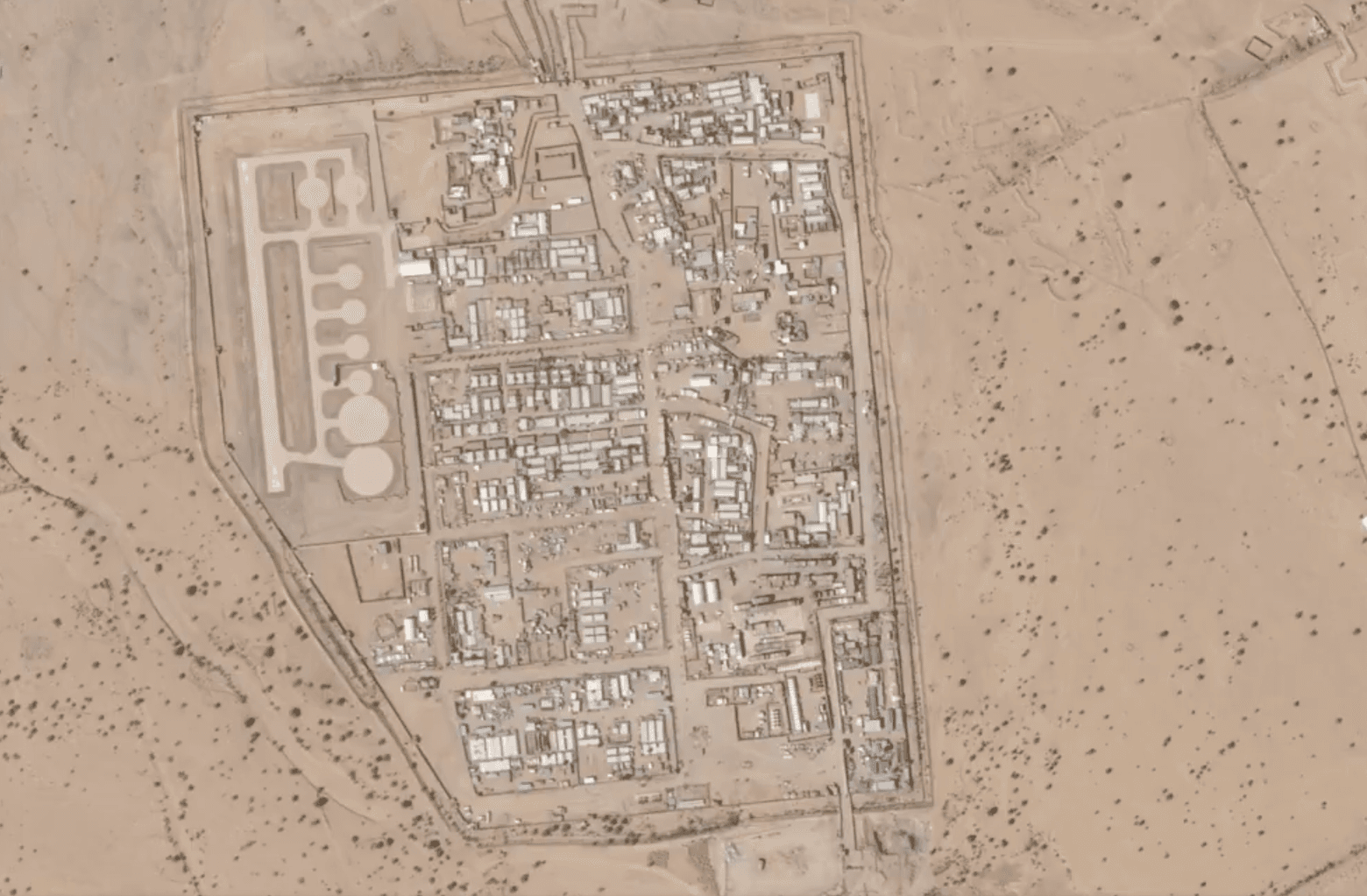
Bamako came under coordinated assault before dawn on April 25. JNIM, the al-Qaeda Sahel affiliate, and the Tuareg-led Azawad Liberation Front, the FLA, struck the Kati military base, Bamako International Airport, the presidential residence, and Defense Minister Sadio Camara’s compound. Sevare Air Base was hit in central Mali. Mopti, Gao, and Kidal came under attack simultaneously.
A JNIM suicide bomber drove a vehicle-borne IED into Camara’s residence at Kati. The defense minister fought back, killed several attackers, and died of his wounds in hospital. His second wife and two grandchildren were killed in the same attack. The government confirmed the death on April 26 and declared two days of national mourning. Intelligence chief Modibo Koné died the following day from gunshot wounds sustained at Kati, per RFI. Army Chief of Staff Oumar Diarra was wounded but alive. President Assimi Goita was evacuated to a secure military camp.
The headline is JNIM at the gate. The story is a policy chain that began on February 27 in a Treasury notice almost no one read, and a security partnership that since the offensive began has contracted under terms set by the rebels.
The Goita government, which expelled France in 2022, broke US security cooperation in 2023, and brought in Wagner and then Africa Corps to replace both, has been quietly rebuilding security ties with Washington for at least eight weeks. The April 25 offensive killed the architect of that Russia partnership and exposed a security guarantor that is now negotiating its own retreat.

The February 27 Delisting
On February 27, 2026, the Treasury Department’s Office of Foreign Assets Control removed three Malian officials from its sanctions list. Defense Minister Sadio Camara. Air Force Chief of Staff Alou Boi Diarra. Deputy Chief of Staff Adama Bagayoko. All three had been designated on July 24, 2023 for facilitating Wagner Group activities, including planning Wagner’s deployment and providing logistical support.
Reuters reporter Jessica Donati filed the delisting from Dakar. Bloomberg confirmed. The OFAC notice itself ran without ceremony. Two and a half years earlier, those names had been the centerpiece of US public messaging that Mali had crossed a line by partnering with Wagner. The lift was not framed publicly as a reversal. It functioned as one.
The March 9 Reuters Report
On March 9, Donati filed again. Washington and Bamako were close to a deal allowing US drone and aircraft overflights for intelligence on al-Qaeda-linked groups operating in Mali. Possible basing locations cited were Côte d’Ivoire and Ghana, with Benin appearing in earlier Wall Street Journal reporting from January 2024.
The architecture matters. This is not a basing-in-Mali deal. The US lost forward basing in the Sahel when American forces were expelled from Niger in 2024 after a Biden administration delegation’s March 2024 visit went poorly. Niger Air Base 201 in Agadez, which cost the Pentagon roughly $110 million to build and $30 million annually to maintain, went dark. The new architecture works around that loss. Drones fly from coastal West African states. Targeting product flows back to Bamako through an intelligence channel that does not require American boots on Malian soil.
For Goita, this is the optimal arrangement. He cannot reverse the public posture against Western troops without breaking the regime’s foundational legitimacy story. He can accept ISR support from a partner who agrees not to put soldiers in country.
The Trump administration’s policy logic has been coherent. It treats counter-terrorism cooperation with Sahel juntas as transactional. The democratic-pressure framing of the Biden years has been stripped out. Top Africa envoy Nick Checker has visited Bamako, Niamey, and Ouagadougou. A State Department spokesperson on April 27 said the United States stands with the Malian people and government in the face of the violence. The formulation, people and government, marks a clear Trump-era willingness to treat the junta as a counter-terrorism partner.

The Broken Truce
Late March, JNIM and the Malian government signed a truce. Mali released roughly 100 to 200 JNIM prisoners, per AFP and security sources cited by Africanews, in exchange for JNIM lifting the fuel blockade on Bamako. The truce was supposed to run until Tabaski at the end of May. The Malian Army’s information director Souleymane Dembele publicly denied the prisoner release on March 31.
JNIM broke the truce with the April 25 offensive. The fuel blockade had been negotiating leverage. The prisoner release was force regeneration. The lull was operational preparation. The siege strategy the International Institute for Counter-Terrorism flagged in January had a coda the framework had not anticipated, a negotiated pause that bought JNIM the time and the personnel to mount the largest coordinated offensive in Mali since 2012.
The Africa Corps Math
The reason Goita is hedging is not ideological. It is empirical.
Africa Corps in Mali fields 2,000 to 2,500 personnel per Reuters and US officials, with Critical Threats placing the figure at 2,500 to 3,500. Approximately 70 to 80 percent are former Wagner. The Sentry’s April 21 report describes identical convoy logistics and the same regime-protection mission. The branding has changed. The operation has not. The cost to the Malian government is roughly $1 billion, per The Sentry and the Africa Report’s February 24 reporting citing French intelligence and Sahel investigators.
The performance data is worse. ACLED conflict event records, summarized by Africa Defense Forum in March, show battles involving Russian fighters in Mali dropped from 537 in 2024 to 402 in 2025, a 33 percent decline. From January 2026 onward, the figure has averaged 24 incidents per month. Africa Corps is engaging less, not more, after Wagner’s transition.
The Sentry’s Doubling Down report tracked three Russian convoys arriving in Mali during the first half of 2025. Tanks. Armored vehicles. Missiles. Boats. Sahel investigators with convoy manifest access told The Sentry the equipment was unsuitable for offensive desert operations and intended to fortify Africa Corps base perimeters, not enable territorial control. Operation Barkhane peaked at approximately 5,100 troops with full air, intelligence, and special operations enablers. Goita brought Wagner in to replace Barkhane and ended up with less than half the capability at a cost his government can barely sustain.

The Russia Constraint
There is a structural reason Africa Corps cannot scale. Russia is fighting in Ukraine.
The UK Ministry of Defence assessed in 2024 that Africa Corps personnel were deployed to support the Russian offensive on Kharkiv. Russian Ministry of Defence recruitment material treats Africa Corps service and Ukraine theater service as equivalent for veteran benefits and pay. Any meaningful surge of Africa Corps into Mali draws from the same manpower pool the Ukraine front is consuming.
Ukraine has compounded the constraint deliberately. The July 2024 Tinzaouaten ambush, in which 84 Wagner mercenaries and 47 Malian soldiers were killed by Tuareg rebels, was preceded by intelligence sharing from Ukraine’s GUR military intelligence directorate. Al Jazeera confirmed the GUR cooperation in June 2025 reporting.
Russia’s war in Ukraine is constraining its security franchise in Africa.
Kidal Under Escort
The clearest evidence that the guarantor has stopped guaranteeing came on April 27. Africa Corps and Malian troops withdrew from Kidal under FLA escort. The official Africa Corps statement described the withdrawal as carried out in accordance with a joint decision by the leadership of the Republic of Mali, with wounded servicemen and heavy equipment evacuated first. A convoy of armored vehicles, towed artillery, and rocket artillery was filmed departing the former MINUSMA camp under FLA escort, per AFP and OSINTdefender geolocation. Sniper units positioned to block the rebel advance were pulled out under the agreement. FLA spokesperson Mohamed Elmaouloud Ramadan declared Kidal free.
Kidal was the symbolic centerpiece of the November 2023 Wagner-backed offensive that re-established central government authority over the north. Russia’s foundational success in Mali. Africa Corps negotiated its exit from it under rebel escort 72 hours after the offensive began.
The cascade has continued. Per Critical Threats’ April 27 update, Tessalit has fallen, with rebels filmed at the military base posing next to an abandoned helicopter. Negotiated withdrawals have been confirmed at Ber in Timbuktu region and at Tessit in Gao region. Islamic State Sahel Province has seized Menaka, where Africa Corps and Malian forces are reportedly besieged at the former UN base. A Russian Mi-8 helicopter was shot down by insurgents near Wabaria.
The structural insight underneath the map is simpler than the map itself. JNIM and the FLA both publicly invited Russia to leave. The FLA called on Russia to reconsider its commitment in Mali. JNIM offered Russia an exit in exchange for not targeting them and coordinating to build a balanced and effective future relationship, per Critical Threats. Russia is taking the exits being offered. The attackers are not trying to defeat Russia. They are negotiating Russia out. And the side that was supposed to hold the north is accepting the terms.

What the Offensive Means for the Deal
The intelligence-sharing channel Donati reported in March is no longer a hedge for Bamako. It is a survival question. But the deal is not yet operational. The basing locations are not publicly confirmed. AFRICOM has not announced overflight architecture. Checker’s Senate Foreign Relations testimony was scheduled for the week of April 27 and is now overtaken by events.
The window between Russia’s failure to deliver and America’s return to functional cooperation is precisely when JNIM moved.
The First-Principles Read
Russian state media is framing the Kidal withdrawal as regrouping. The convoy was escorted out by the side it was supposed to defeat. The metric for counter-insurgency is not whether the palace stood on April 25. It is territorial control, operational tempo, and whether the security partner can still set the terms of its own movements. The defense minister who built the Russia partnership is dead at the most fortified base in the country. The intelligence chief is dead. The army chief of staff is wounded.
A guarantor that cannot prevent strikes near Bamako, cannot hold Kidal, and cannot move without rebel permission is no longer setting the terms of the war. It is negotiating its place inside someone else’s battlefield.
The harder question now is not whether the architecture under construction can deliver where Africa Corps has not. It is whether there is a Mali state to deliver intelligence product to. Camara was the most senior pro-Russia voice in the regime and Lavrov’s direct counterpart in Moscow. His death potentially fractures the internal political coalition that drove the Russia partnership. It also removes the Malian counterpart Washington had been delisting and engaging through. Critical Threats’ April 27 assessment notes the attacks have sparked a political crisis in Bamako that may result in the ouster of Goita.
The April 25 offensive does not resolve that question. It sharpens it.
___
John Hendricks is an OSINT analyst and the founder of Global Recon. Follow on X: @IGRecon