
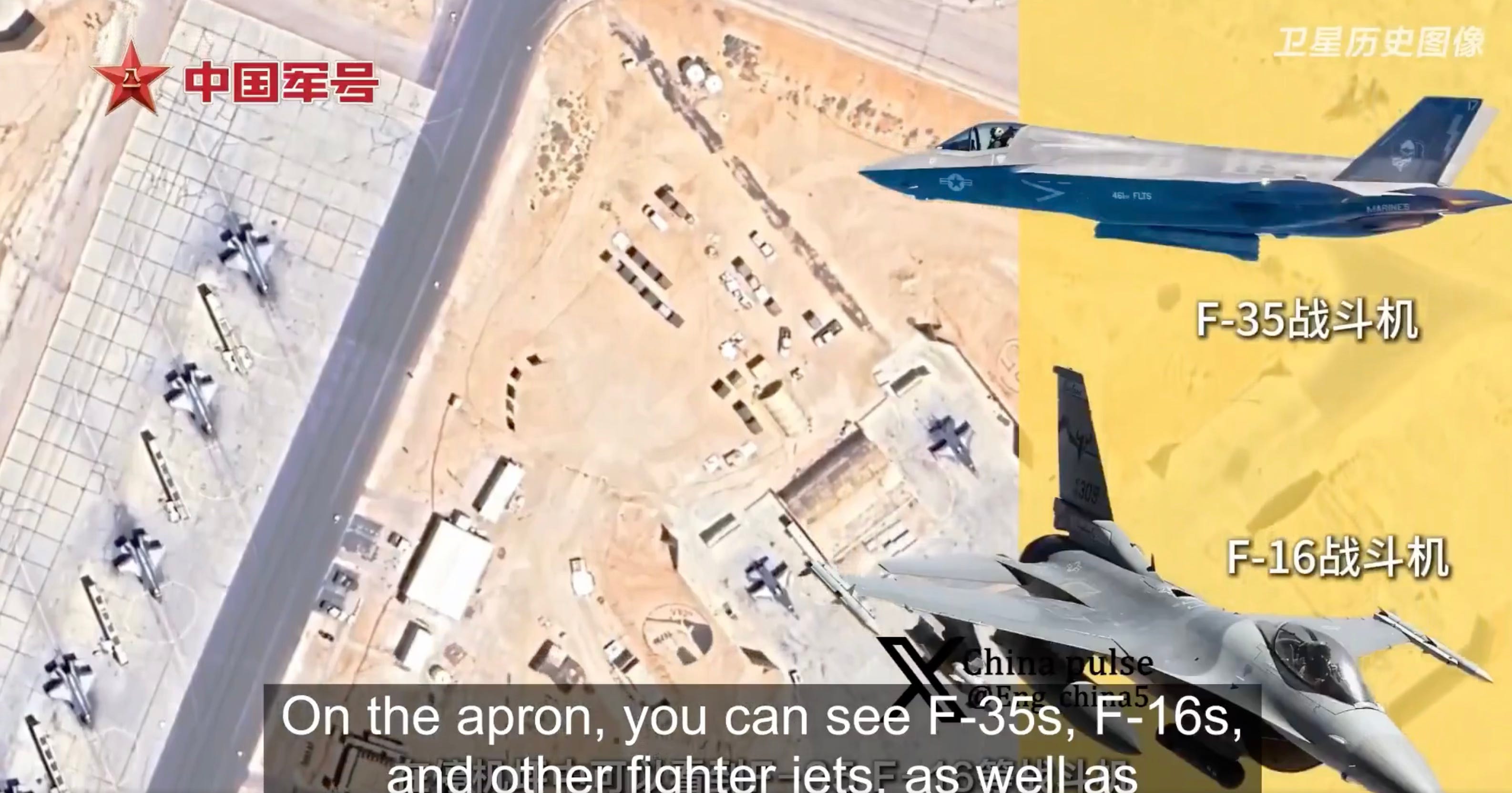
Four days before Operation Epic Fury began, a Chinese geospatial intelligence company with fewer than 200 employees started publishing annotated satellite imagery of U.S. military deployments across the Middle East. The images were high resolution. The annotations were precise. Eleven F-22s at Ovda Air Base in Israel. Eighteen F-35s and six EA-18G Growlers at Muwaffaq Salti in Jordan. Seven E-3 AWACS jets, KC-135 and KC-46 tankers, and E-11 communications aircraft at Prince Sultan in Saudi Arabia. Both carrier strike groups are in theater. The runway assets at Diego Garcia. Several of the facilities and assets catalogued were subsequently struck by Iran.
The company is MizarVision, formerly Mishang Technology (Hangzhou) Co., Ltd., founded in 2021. It does not operate a single satellite. Its first post on X appeared on February 24, 2026. The opening strikes of Epic Fury followed four days later.
The instinct is to frame this as an espionage story. That framing is wrong, and the wrong frame produces the wrong policy response. MizarVision did not steal anything. It processed commercially available imagery through a proprietary AI layer, published the product to Weibo and X, and demonstrated at scale what the commercial satellite market has been quietly enabling for years: that any actor with sufficient AI tooling and reseller chain access can produce targeting-grade intelligence on U.S. military movements without touching a classified network, without running an intelligence officer, and without triggering any legal threshold the United States currently has the authority to address.
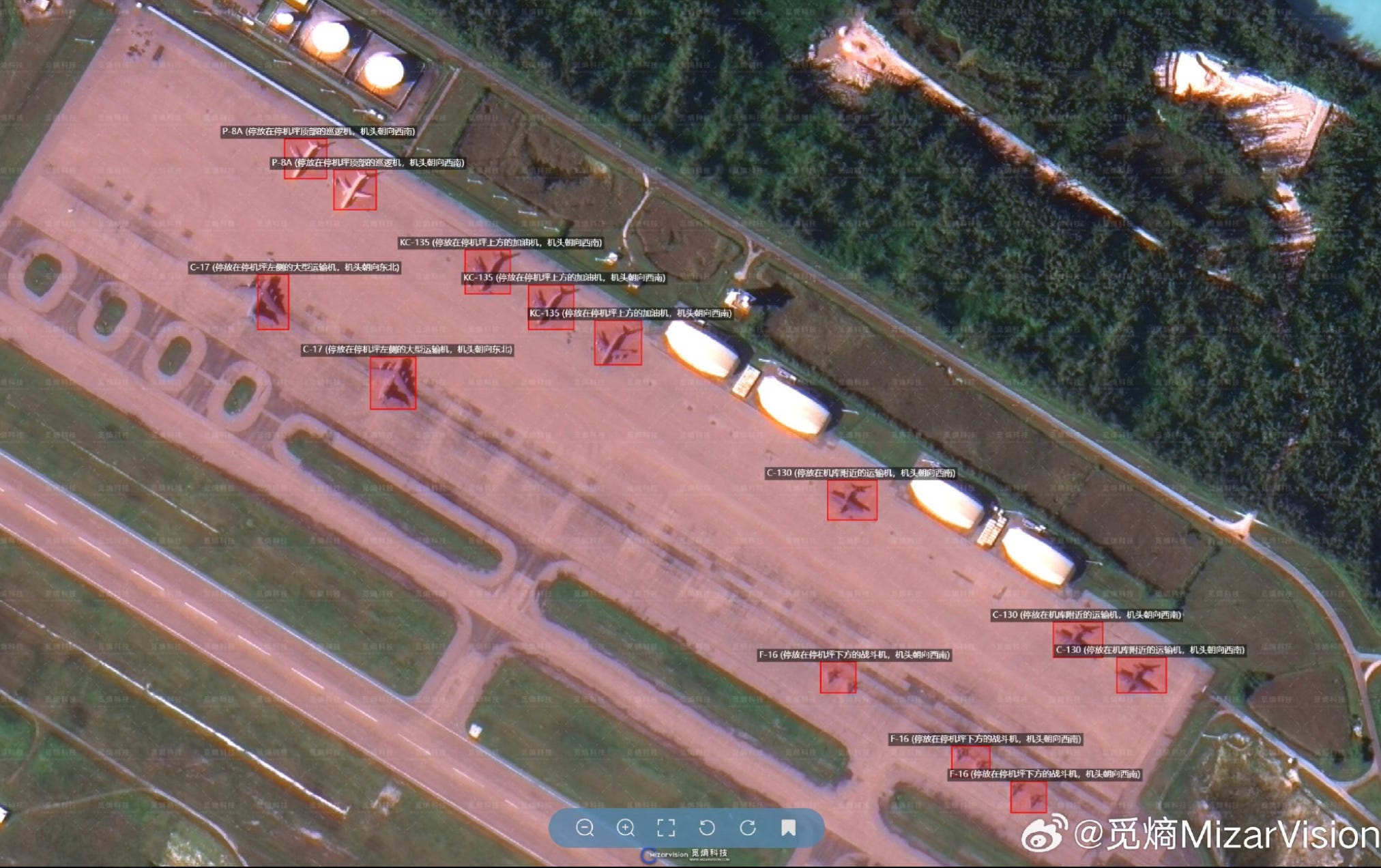
Where the Imagery Came From
The most authoritative public assessment of imagery provenance came from Hu Bo, Director of the South China Sea Strategic Situation Probing Initiative and research professor at Peking University’s Center for Maritime Strategy Studies. Hu stated he is 100 percent sure the images came from U.S. and European commercial satellites, not Chinese ones. His methodology: satellite ephemeris data allows backward calculation from image timestamp and ground position to identify which satellite was in the correct orbital position. The resolutions matched Western commercial platform specifications.
At approximately 0.3-meter resolution, the imagery enabling individual aircraft identification traces to Vantor, formerly Maxar Intelligence, a U.S. company. Wide-swath maritime imagery traces to Planet Labs, also a U.S. company. Both told FlightGlobal they do not sell imagery to MizarVision. A MizarVision representative confirmed to reporters that imagery sources included both Western and Chinese commercial providers while declining to identify suppliers for specific images. New Space Economy’s March 2026 company profile identified the mechanism: imagery acquired through reseller arrangements or intermediaries not traceable to the original provider. The primary providers cannot monitor end-use through intermediary chains because the regulatory framework that governs them, the Land Remote Sensing Policy Act, covers direct sales from licensed U.S. operators and stops there. Once imagery enters a reseller chain, it is outside the framework’s reach.
The gap is structural, not incidental. It was not designed in as a loophole; it was never designed against because the threat model requiring it did not exist when the framework was written.
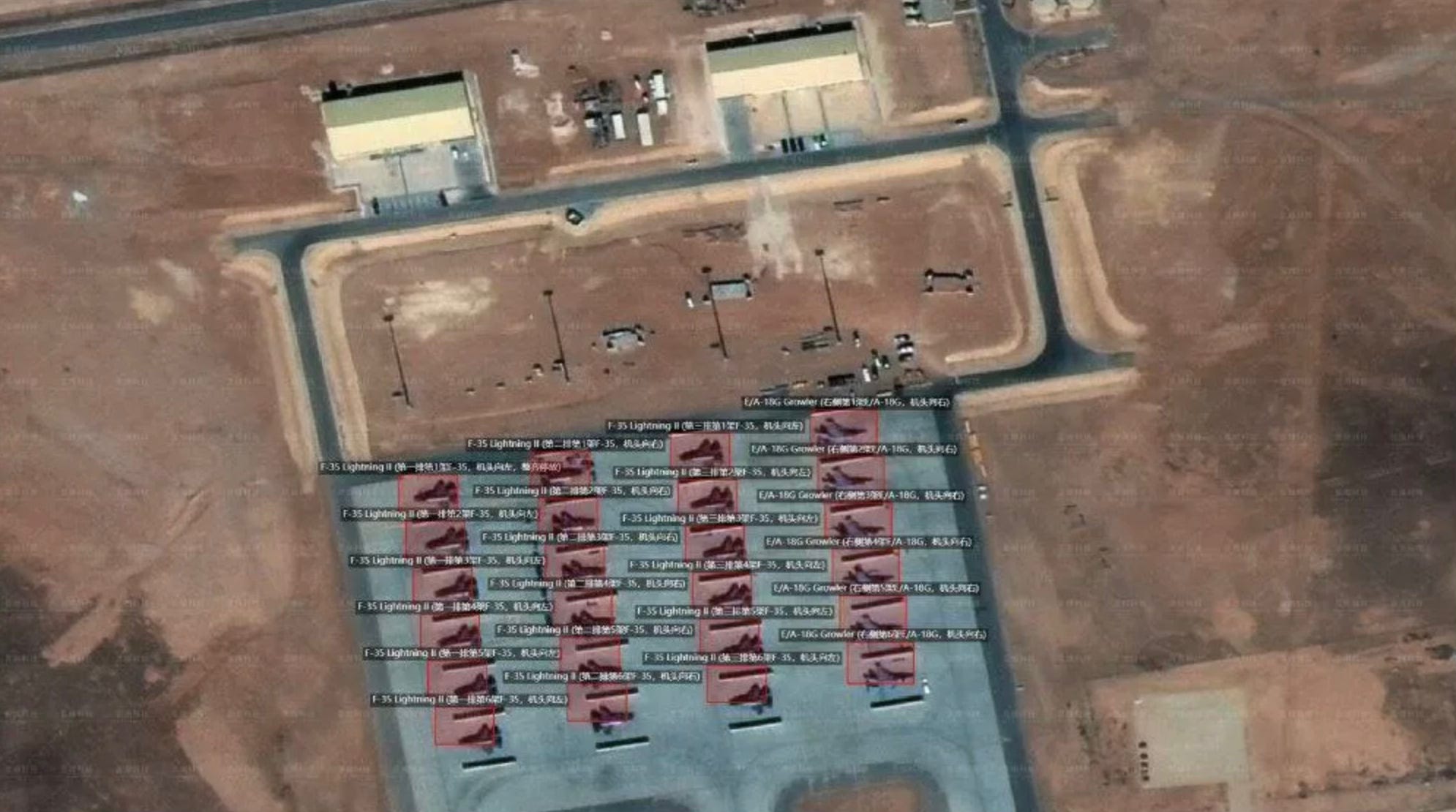
The AI Layer Is the Weapon
Access to commercial imagery is not new. The capacity to convert it into real-time, annotated, multi-site intelligence products at speed and scale is. MizarVision’s proprietary object detection and change-tracking tools produced cross-referenced targeting-grade intelligence without the overhead of a national intelligence agency. PLA commentator Song Zhongping described it to the South China Morning Post with precision: it demonstrates capability and is advertising.
MizarVision was not the only company running this operation. Jinghan Technology, also based in Hangzhou and sometimes described as China’s Palantir, posted audio on social media claiming it had recorded communications from two U.S. Air Force B-2A stealth bombers in the opening stages of Epic Fury, then deleted the post amid the ensuing controversy. U.S. officials assessed the intercept claim as implausible. The deletion matters less than the fact of the attempt: a second Chinese company, with the Central Military Commission, public security agencies, and the Ministry of State Security among its clients, was running a parallel intelligence operation against U.S. forces in the same theater at the same time. This is a market, not an isolated demonstration.
The PLA amplified the effort separately and simultaneously. China Military Bugle, the PLA’s official social media platform, released a video titled Siege of Iran: Where will the US military launch its attack in the Middle East? It featured high-resolution imagery of eight U.S. bases and highlighted Patriot system positions at Al Udeid, Al Dhafra, and Prince Sultan. The dual publication, MizarVision on commercial platforms and China Military Bugle through official PLA channels, was timed precisely to U.S. force concentration in the days before Epic Fury’s opening strikes.
One base was absent from MizarVision’s tranche: Al Dhafra in the UAE, home to the U.S. 380th Air Expeditionary Wing. Aviation Week noted the omission without resolution. Whether it reflects a coverage gap, a deliberate signal of restraint toward Abu Dhabi, or a break in the reseller chain for that specific facility remains unresolved. It is the one unexplained seam in an otherwise methodical operation.
One caveat requires stating flat. FlightGlobal reported it is unclear whether MizarVision’s imagery was used by Tehran to support its missile and drone strikes. The correlation is real: assets catalogued, assets subsequently struck. Causation is not established and should not be inferred from the sequence.
The United States set the underlying precedent itself. Ahead of Russia’s February 2022 invasion of Ukraine, Washington released declassified commercial satellite imagery proactively, denying Moscow narrative control over its own military buildup. The doctrine worked. MizarVision did not invent a new capability. It adapted the American approach and applied it against American operational security at the moment of maximum U.S. force concentration.
Carrier Aviation and the Fujian
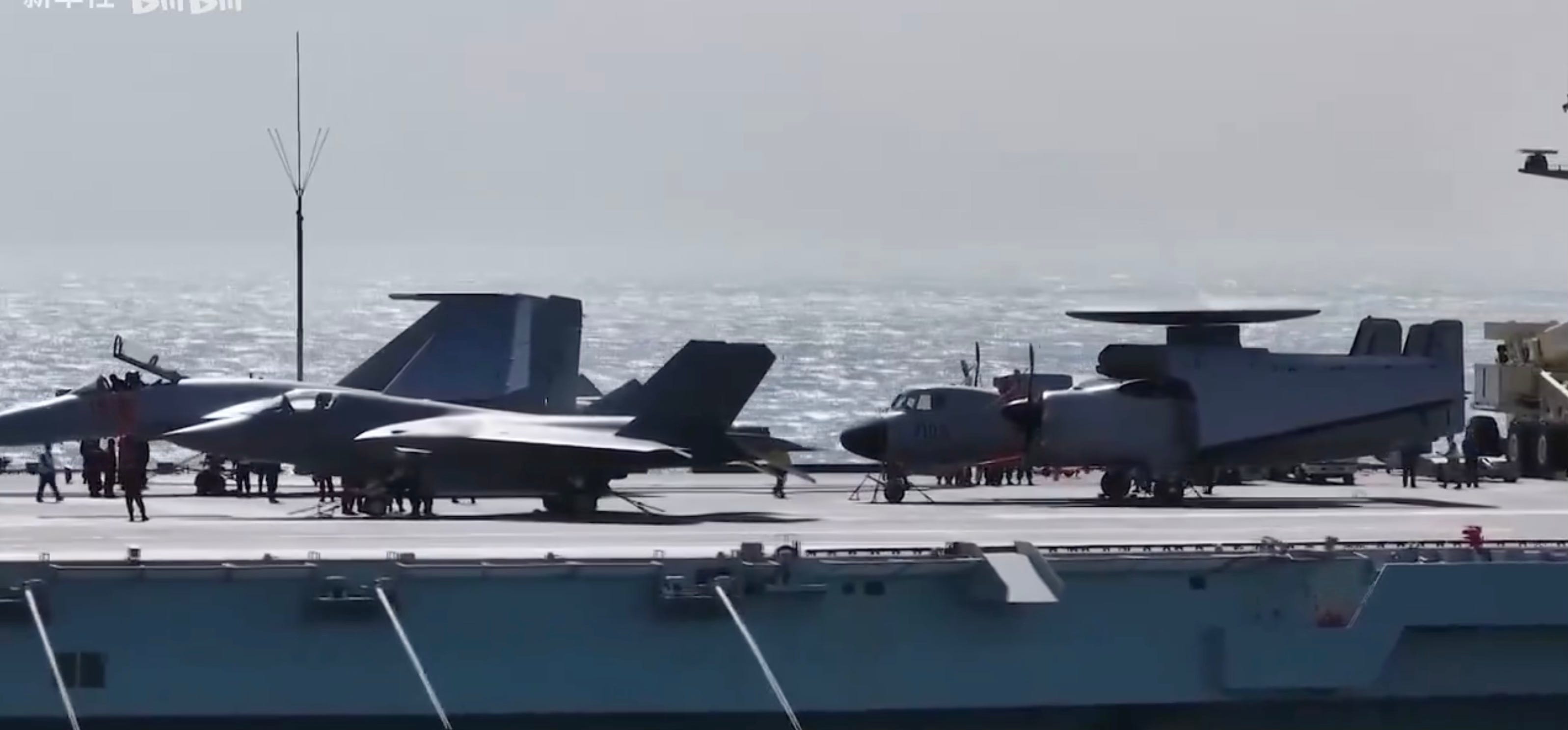
China commissioned the Fujian, its Type 003 CATOBAR carrier, in late 2025 in a ceremony at Sanya attended by Xi Jinping. The Fujian is China’s first carrier with electromagnetic catapults. Its developing air wing includes J-15T fourth-generation fighters with AESA radar and domestic WS-10 engines, J-35 fifth-generation stealth fighters, and KJ-600 airborne early warning aircraft. All three types conducted catapult launches and arrested landings during September 2025 sea trials, per AeroTime. Full operational capability, including an integrated air wing and strike group, requires an additional year or more beyond commissioning by expert assessment.
The J-15T entered active service in October 2024. As of November 2024, reporting by aviation analyst Andreas Rupprecht, at least 14 operational J-15T airframes had been confirmed at low-rate initial production, with at least three production batches delivered and a fourth underway, per Naval News’s August 2025 reporting. The 10th and 11th Naval Aviation Brigades are the only confirmed J-15T operational units. A possible third brigade standup, flagged by Rupprecht in early April 2026, carries an April 1 dating caveat that Rupprecht himself noted; it is a watch item, not a confirmed fact.
The DoD’s December 2025 China Military Power Report assessed China as planning to acquire nine aircraft carriers by 2035. A Type 004 nuclear-powered carrier is under construction. Six additional carriers beyond the three currently in service, each requiring trained carrier air wings, implies a pipeline expansion well ahead of hull delivery. The Fujian commissioning and the J-15T production ramp are not planning signals. They are present-tense capability developments proceeding while U.S. strategic attention is concentrated in another theater.
What the Dual Track Is Doing
The two developments serve a unified strategic logic that neither reveals independently. MizarVision established that U.S. carrier strike group positions are trackable in real time through commercially available imagery processed by a startup. The Fujian’s commissioning, with J-35 and KJ-600 integration underway, signals that China is building the strike capacity to act on exactly that kind of intelligence in a future contingency. The demonstration was not for Iran’s benefit. It was for Taiwan’s calculation and Washington’s.
For Iran, the MizarVision operation signaled Chinese commercial intelligence capability without triggering the threshold of a sanctionable arms transfer. For Taiwan, it demonstrated that U.S. carrier strike groups are not invisible in the pre-strike phase of a major operation. For the U.S. military, it surfaced a vulnerability embedded in a commercial market Washington built and expanded through progressive regulatory decisions permitting higher resolution imagery for commercial sale, a market it now cannot easily restrict without dismantling an industry it depends on for its own ISR functions.
Washington’s response, so far, has been to ask Planet Labs to suspend satellite imagery services for Iran and Middle East conflict zones indefinitely. Planet Labs complied. The move addressed one named provider. It left the reseller chain intact, every other commercial operator unaffected, and the Land Remote Sensing Policy Act’s structural gap untouched. Plugging one hole in a framework with no walls is not a policy. It is a signal that the policy has not been written.
The commercial surveillance economy is structurally incompatible with the operational security requirements of U.S. power projection. Washington has two options: restructure the commercial satellite market in ways that would degrade U.S. companies’ competitive positions and constrain the imagery infrastructure the U.S. intelligence community depends on, or accept that any actor with sufficient AI tooling and reseller chain access can produce targeting-grade intelligence on U.S. force concentrations without running a single officer or touching a classified system. The Planet Labs suspension chose neither. What happens the next time U.S. forces concentrate in a theater where the adversary has the AI capacity to process what American companies are already selling?
John Hendricks is an OSINT analyst and the founder of Global Recon. Follow on X: @IGRecon