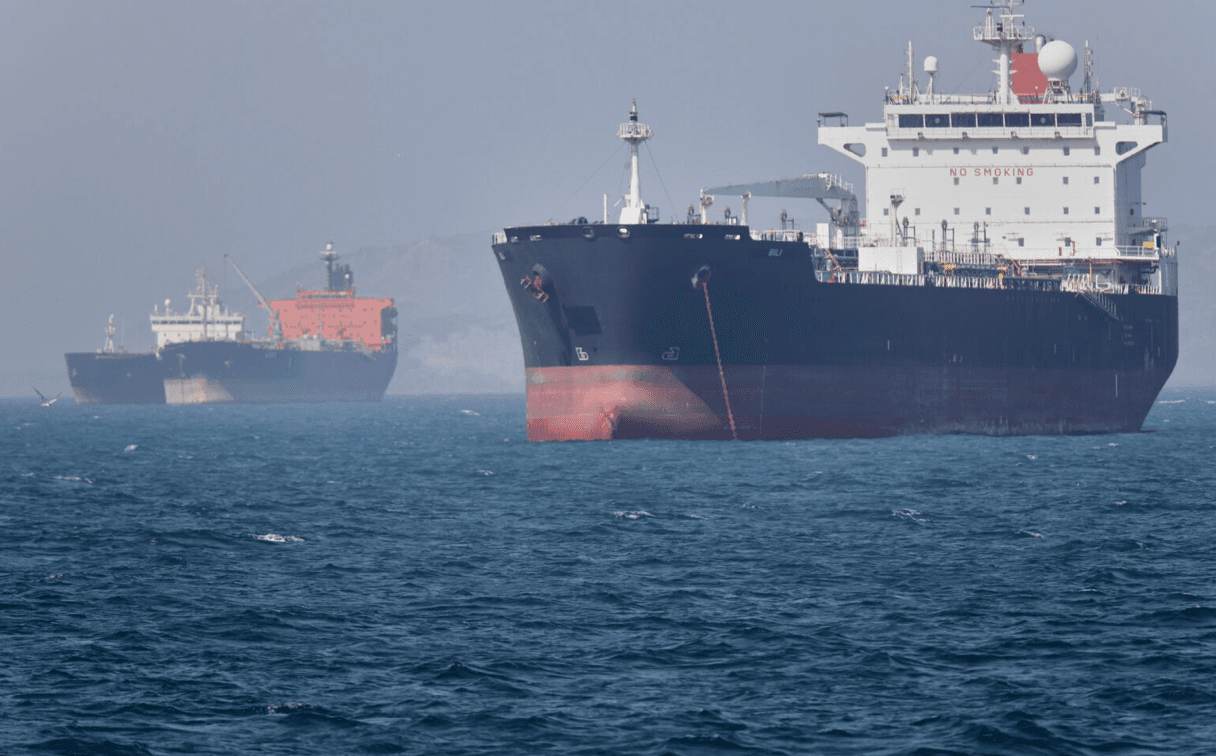
DHAHRAN, May 12, 2026 Saudi Aramco CEO Amin Nasser told first-quarter earnings analysts on May 11 that even an immediate reopening of the Strait of Hormuz would not return the oil market to balance for months, and that a closure extending past mid-June pushes normalization into 2027. The market has lost roughly one billion barrels of supply since early March, with a net loss near 880 million barrels after pipeline reroutes and strategic reserve releases.
The headline is the timeline. The substance is who is delivering it.
Aramco is the world’s largest producer and the operator of the East-West pipeline now running at its 7 million barrel per day ceiling. Nasser is not modeling the recovery from outside the system. He is describing what Aramco itself sees in field restart physics, tanker dislocation, and Yanbu’s export capacity. Two to five vessels are transiting Hormuz daily against a pre-war baseline of seventy.
The April IEA Oil Market Report assumed regular Middle East deliveries would resume by mid-year. The EIA’s April STEO priced Brent at $88 by the fourth quarter on the assumption Hormuz traffic gradually resumes. Both projections sit on the prior that the Strait reopens on a near-term political timeline. Brent settled at $104.21 on May 11 after President Trump rejected Tehran’s counterproposal and called the ceasefire “unbelievably weak.”
Nasser breaks that prior. The diplomatic question and the supply question have decoupled. Damage to tanker fleet positioning, refinery feedstock chains, and Gulf field productivity is now structural enough that the reopening date and the rebalancing date are no longer the same date. A few more weeks of closure does not produce a few more weeks of disruption. It produces a year of carry.
This is the operator of the system telling the agencies modeling the system that their base case is wrong.
The question for the May STEO release and the IEA’s May report is whether the modeling agencies revise toward the operator’s view or hold their priors against it. If Hormuz reopens tomorrow, the question is no longer whether prices fall. The question is how long they stay where they are while the system that delivers the oil reassembles itself.