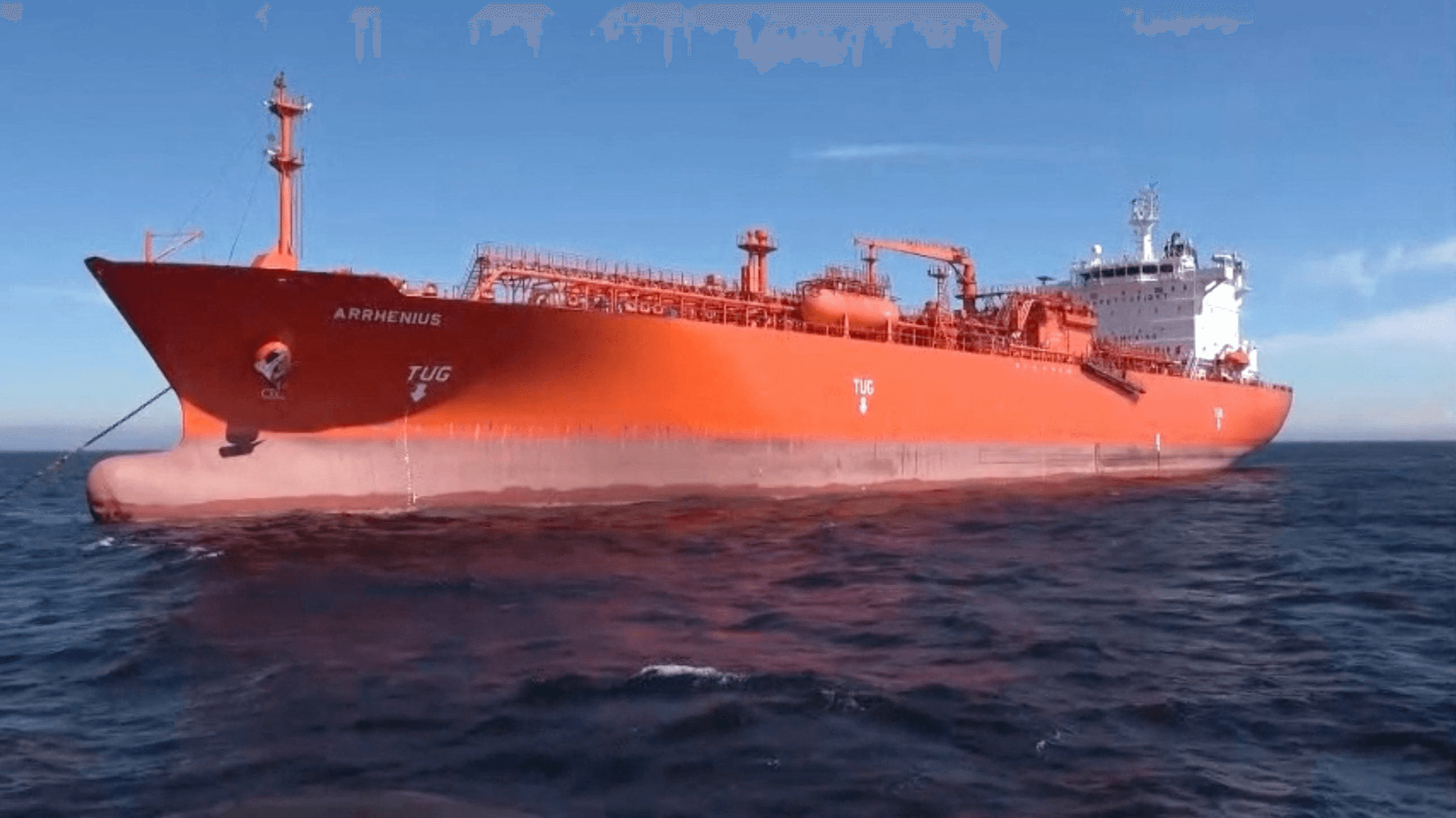
Russia’s FSB said divers found two magnetic mines attached near the engine room of the Liberia-flagged LPG tanker Arrhenius after it arrived at Ust-Luga on May 20 from the Belgian port of Antwerp. Each device contained roughly seven kilograms of plastic explosive. The Investigative Committee said the mines were factory-made naval munitions produced in a NATO country, opened a criminal case for attempted terrorism, and asserted that the devices could not have been installed in Russian territorial waters. TASS later suggested the mines may have been homemade rather than a recognized NATO design, a contradiction inside the Russian source record itself. The vessel, managed by UAE-based Maple Mariner Holding, was scheduled to load LPG and sail to Samsun, Turkey.
The Baltic sabotage campaign now operates above the waterline of detection. Earlier mines blew tankers up at the dock. This time inspectors found them first, which means both attackers and defenders are running a more mature operation.
The Arrhenius is the seventh known target in eighteen months. Russia instituted mandatory hull inspections at Ust-Luga in 2024 after a series of unexplained engine-room blasts. The Suezmax tanker Koala was holed in February 2025 at the same port. France 24 documented six tankers struck across the Baltic and Mediterranean through mid-2025, including the Seacharm off Ceyhan, the Grace Ferrum off Libya, the Seajewel at Savona, the Vilamoura, and the Eco Wizard, which took two blasts at Ust-Luga in July. Russian investigators say the Arrhenius spent roughly a day and a half at anchorage outside Antwerp before loading, which is the window they are now examining.
What to track next: whether Antwerp port authorities open their own investigation into the anchorage interval, and whether insurers begin pricing Russian port calls separately from general Baltic risk.