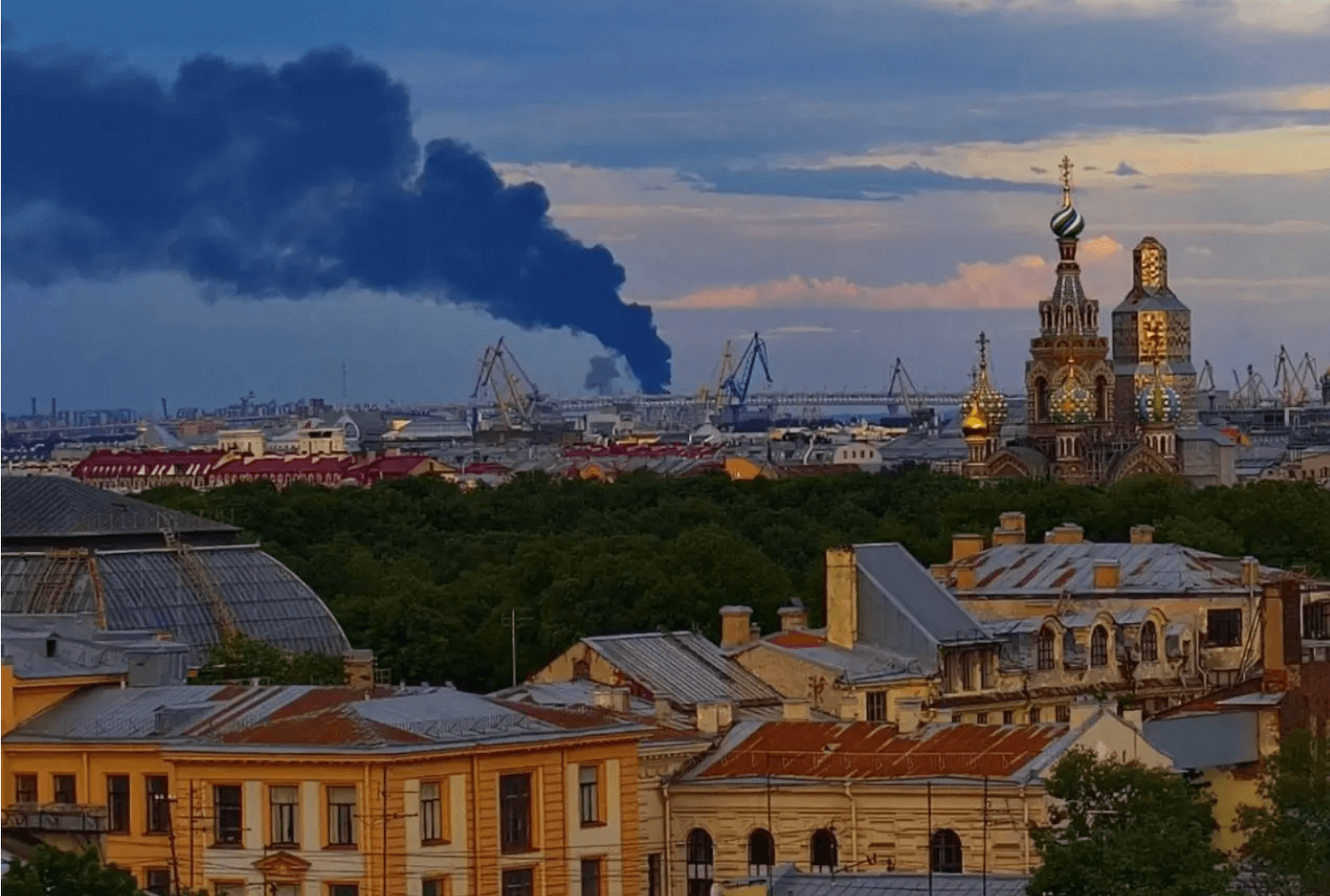
Ukraine’s Unmanned Systems Forces and the Security Service struck the Russian corvette Boikiy at 06:35 on June 3, hitting the Project 20380 vessel as it sat in the Veleshchynsky dry dock at the Kronstadt naval base near St. Petersburg, more than 1,000 kilometers from Ukrainian-controlled territory. The General Staff confirmed strikes on ships and infrastructure at Kronstadt, the symbolic home of Russia’s Baltic Fleet. The same operation set fire to the St. Petersburg Oil Terminal as the Kremlin opened its flagship economic forum 17 kilometers away.
The target was the escort, not the cargo. Kyiv’s campaign against Russia’s oil revenue has spent two years hitting refineries, terminals, and tankers. The Boikiy strike moves up the stack, to the naval force-protection layer Moscow built over shadow-fleet transit rather than the export infrastructure itself.
Unmanned Systems Forces commander Robert Brovdi, the officer who claimed the strike, described the Boikiy as a ship with a history of shadowing Russia’s oil fleet along NATO’s borders. That characterization comes from the attacking side and is not independently confirmed. The broader practice is documented. Finland’s defense minister said in 2025 that Russia had begun using warships to escort shadow-fleet tankers through the Gulf of Finland, calling it unprecedented, and an OCCRP investigation with Helsingin Sanomat and Delfi identified 17 men placed aboard those tankers as vessel-protection teams, 12 with possible ties to Wagner or military intelligence, a finding Finnish security services corroborated. The Boikiy had been in dry dock since February, so this was not interdiction at sea. It was Kyiv declaring the escort itself a target.
The campaign now has a new target class. The question is whether Kyiv begins treating the warships that guard Russia’s export lifeline as standing targets, and whether that forces Moscow to push its protection further out or pull it back toward port, thinning the cover over the tankers that pay for the war.