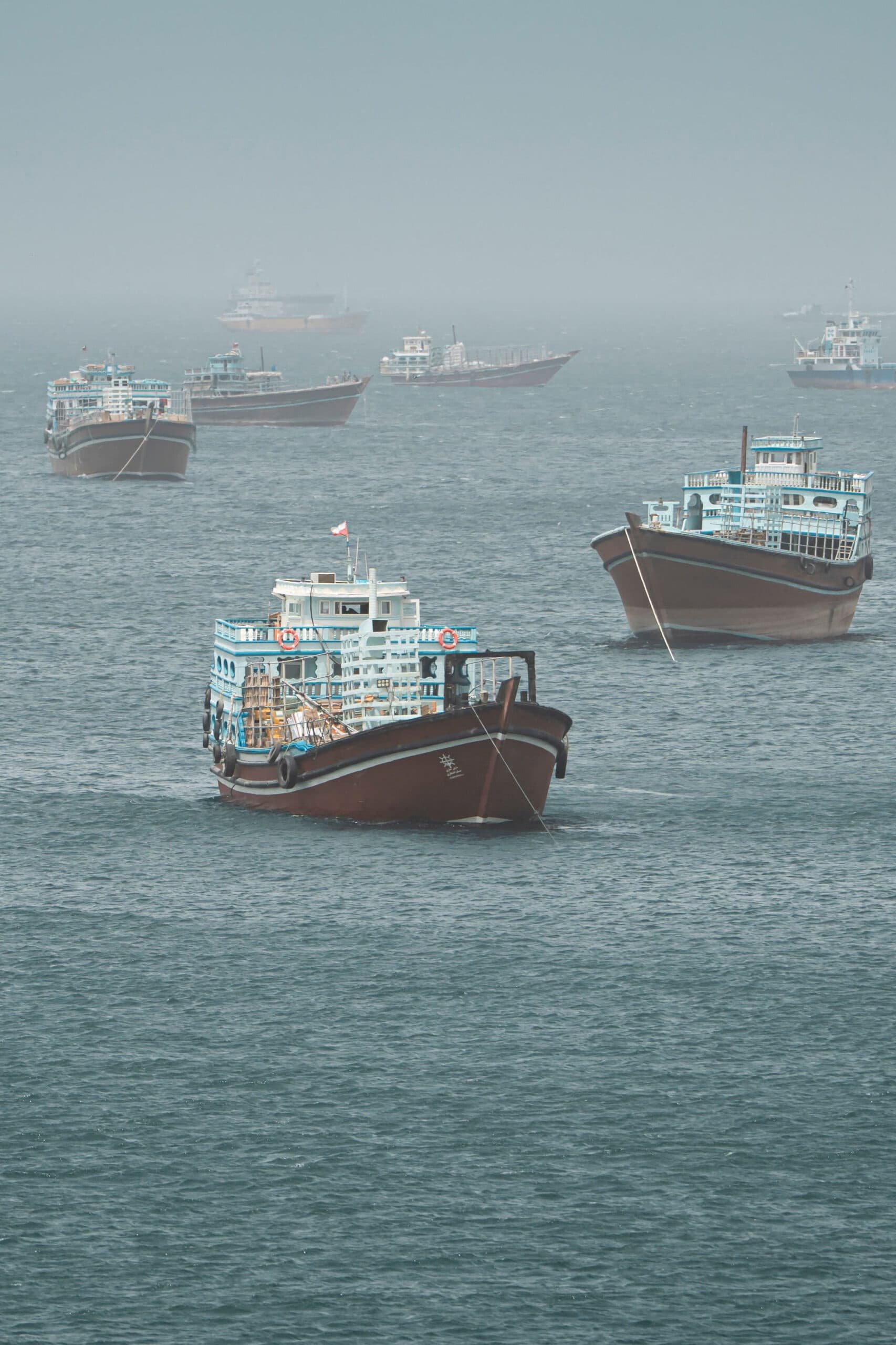
CENTCOM says it has redirected 85 commercial vessels and disabled four since the US naval blockade of Iran began April 13. The IRGC Navy said Wednesday it coordinated the transit of 26 vessels through the Strait of Hormuz in the past 24 hours, including tankers and container ships, with the statement carried by ISNA. Both navies are counting different ships.
The conventional read is a US blockade with Iranian harassment. The operational picture is two enforcement regimes claiming authority over the same chokepoint.
Lloyd’s List Intelligence reported May 19 that one in every six vessels transiting the Strait since March 1 has been flying a fraudulent flag, identified through AIS and registry analysis. The same data set documents a fake Botswana-flagged tanker, Virgo, that transited westbound in ballast and then loaded Iranian crude at Kharg Island. The identification system both navies depend on to enforce against named vessels has degraded to a degree that makes verifiable interdiction and verifiable escort selective at best.
The insurance market has already adjusted. Underwriters covering Hormuz transits are requiring Tehran-side coordination as a precondition for binding, a shift that prices IRGC operational control over passage decisions independently of US blockade claims.
CENTCOM counts what it turns away. The IRGC counts what it escorts. Lloyd’s confirms a substantial fraction of the traffic neither side can confidently name. The waterway is contested in fact, not in narrative.
The next signal worth tracking is the insurance market. Premium structure and flag composition will reveal which regime shippers are pricing toward faster than any statement from either capital.